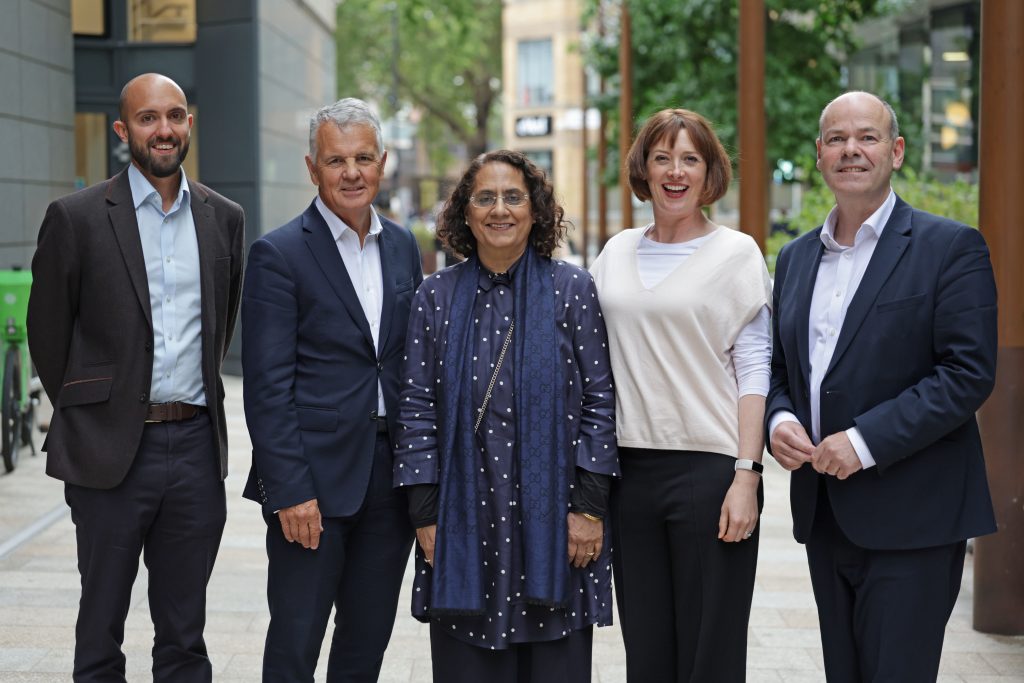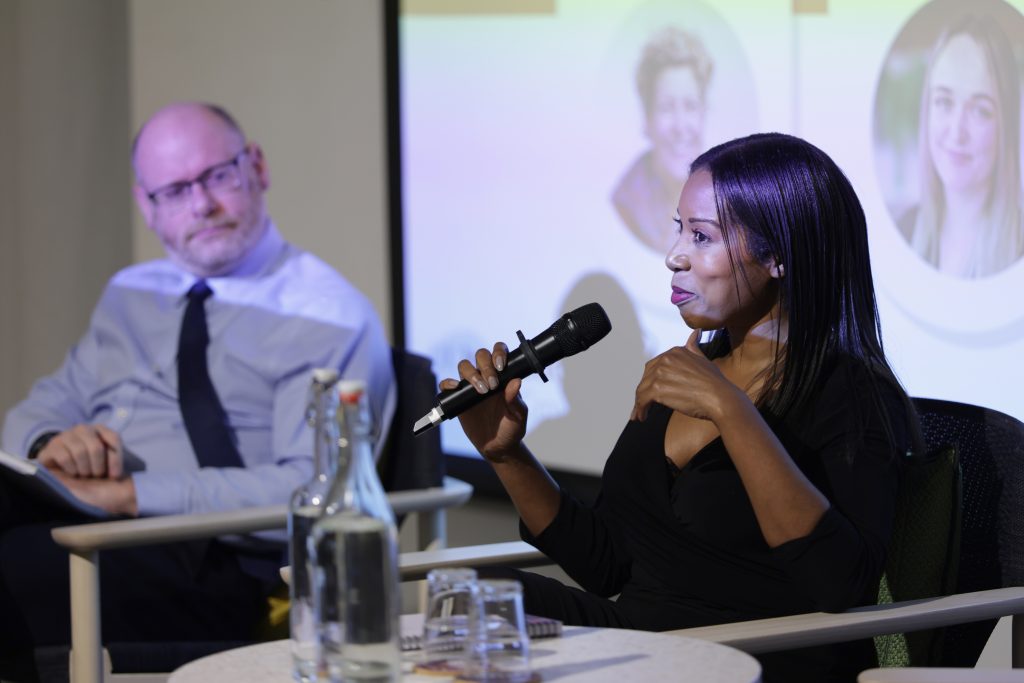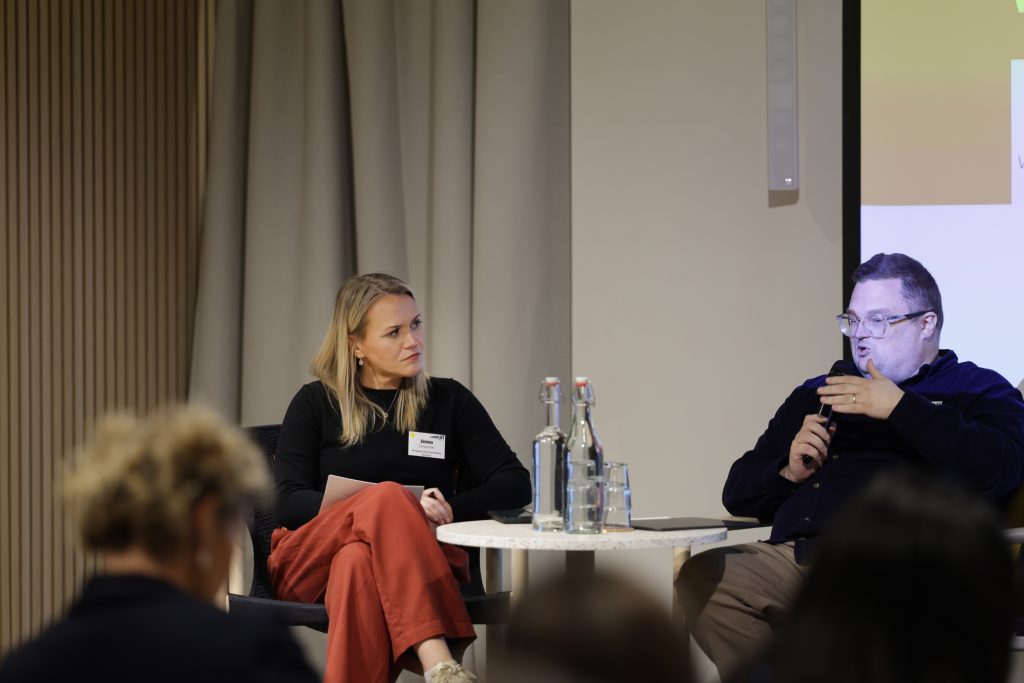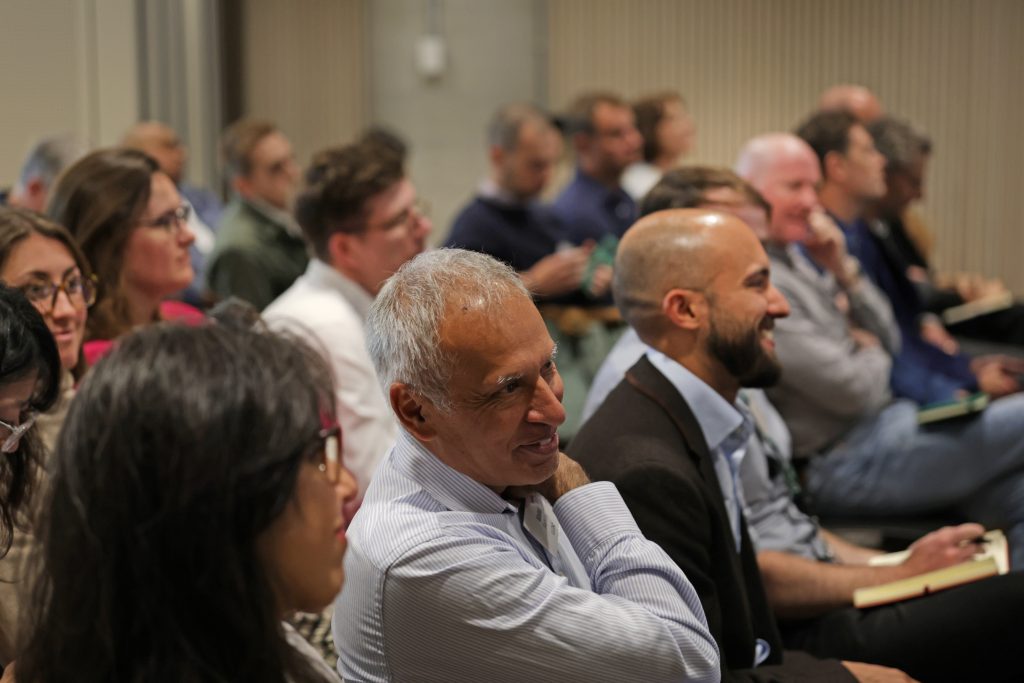
At last week’s UK Innovation Districts Summit 2026 in Liverpool, a vital conversation took centre stage: ‘Public opinion on R&D and innovation: why it matters and what next.’ We sat down with David Marlow (Chief Executive, Third Life Economics) and Jane Robinson (Pro Vice-Chancellor, Business, Partnerships and Place, Newcastle University) to unpack a reality that every innovation district leader in the UK must now confront.
While our districts are engines of economic growth and scientific breakthroughs, a widening disconnect is forming right on our doorsteps. If we want our ecosystems to be sustainable, we have to change how we engage with, and deliver value to, our local communities.
Here are the key takeaways from the discussion and what they might mean for your leadership strategy.
1. Public Perception of ‘value’
The majority of people support the need for R&D funding. In particular, they support university medical research and understand its potential to save lives and improve health outcomes. The Campaign for Science and Engineering (CaSE) Public Attitudes Study found that 88% of people support the need for Government funding into R&D activity but actually only 18% of people state that they feel any benefits of this in their immediate area or for their family.
The takeaway for leaders: For too long, the “value” of an anchor institution has been abstract or inward-facing. If local people feel that the knowledge generated in our districts is detached from their daily lives or that the career pathways we create are out of reach, we risk losing our social license to operate. We must bridge this gap by really strengthening university-community links.
2. Putting “Place” and “People” First
How do we fix this? The duo discussed a strategic framework for innovation districts that shifts our focus from purely property-led development to human-centered placemaking, and referenced a recent report: Driving Inclusive Innovation.
True inclusive innovation isn’t a byproduct of growth; it must be intentionally designed. As leaders, our role is to connect the research strengths of our universities directly with the immediate opportunities and challenges within our local communities. There is also a direct call to focus on human-centered design in the development of districts both in physical estate and facilities access terms but also in the services and programmes that we run.
3. Measuring What Matters: Frameworks for Inclusive Metrics
You can’t manage what you don’t measure. The summit highlighted the urgent need to rethink the metrics we use to measure success for innovation districts and ensure they focus on outcomes and inclusive growth just as much as jobs and GVA. UK IDG has been working on this to co-design a Framework for Innovation District Metrics.
Stakeholders across districts need a standardised vocabulary and dataset to articulate their inclusive innovation ambitions. We need to move beyond traditional metrics like “square footage developed” or “venture capital raised” and start tracking indicators that prove local wealth building, community health improvements, and economic resilience at neighbourhood-level.
4. Creating Real Pathways: The “Building Blocks” Model
Inclusive innovation requires tangible programmes, not just policy papers. A standout example discussed was BUILDING BLOCKS. Newcastle Helix’s BUILDING BLOCKS work experience model is based around a ‘work placement safari’, where rather than relying on a one-week placement with a single employer students are exposed to a range of experiences involving real workplaces, real people and real skills.
This initiative is actively breaking down barriers, directly connecting young people with global industry partners and government stakeholders. By scaling projects like this, innovation districts can provide life-changing, practical exposure to young people who might otherwise feel completely alienated from the innovation economy – as this recent film about the Future of Work Experience explains.
5. Co-Design: Engaging Communities Early
Jane Robinson shared critical insights from Newcastle, emphasizing that community engagement cannot be an afterthought or a “tick-box” exercise at the end of a project.
Newcastle University’s approach relies heavily on involving local communities early in the design phase of innovation projects. When residents are treated as co-designers of the district’s priorities, the resulting innovations are more relevant, more trusted, and far more likely to deliver genuine local impact.
6. Navigating the Complexity of Diverse Regions
Finally, the panel tackled a systemic hurdle: the sheer difficulty of scaling university-driven innovations across vastly different political and regional landscapes in the UK. What works in a highly devolved combined authority might stall in a different regional context. Just as what works in an inner city district might be different from a semi-rural town.
To succeed, innovation district leaders must advocate for regional certainty and tailor their value proposition to the specific political and economic realities of their geography. Innovation must be made highly relevant to local political leaders and public priorities to secure long-term backing.
What Next for District Leaders?
As leaders, we must use our convening power to co-design our districts with the people who live, work and study in them. By adopting inclusive metrics, investing in early community engagement, and building concrete pathways for people to get real value from a district (like Building Blocks in Newcastle), we can shift the dial on public opinion.
What steps is your district taking to co-design with your local community? Let us know by joining the conversation on LinkedIn.
UK Innovation Districts Group Associate Members Arup, will be joining leaders working across the built environment, placemaking and economic development roles, at the annual UK IDG Summit this Friday (5 June) in Liverpool.
Arup and UK IDG have been collaborating on industry research and policy white papers for almost a decade and today UK IDG can announce that Jack Baker – Senior Urban Designer and Architect at Arup, and Charlotte Cutter – Arup Consultant, will be joining other place-based innovation specialists to facilitate two of the three workshops at the 2026 Summit.
Charlotte will be convening a conversation on ‘Crowding Investment into Innovation: developing prototypes’. Jack will facilitate a workshop – ‘Mapping and Maximising Entrepreneurial Skills – lessons from Liverpool, Newcastle and Belfast’.
Last week UK IDG reported that Metro Dynamics are to facilitate the workshop ‘From data to decisions: how good data drives good outcomes’ – you can read more on that news here: https://www.ukinnovationdistricts.co.uk/uk-innovation-districts-summit-power-up-session-with-metro-dynamics-announced/
Arup, is a global consultancy with 18 UK-based offices and they have been operating in the built environment space for 80 years. A thought leader in the innovation district space, Arup collaborates with UK IDG Members, government agencies, businesses, research partners and placemakers to deliver inclusive and sustainable growth for UK cities and regions.
The team brings with them a wealth of experience, from policy leadership and mapping innovation ecosystems, developing the spatial proposition and case for innovation-led investment, to partnering with universities and other anchor institutions that drive the research and commercialisation capabilities of innovation districts. This includes convening and accessing innovation talent, and identifying opportunities to connect businesses, skills, people and places.
As long-time advocates of the ‘inclusive innovation agenda’, Arup will be sharing their experience working with innovation districts and ecosystems to support economic growth – creating local jobs for local people, and designing places and networks that attract people and investment.
At last year’s Summit UK IDG launched the action paper ‘Unlocking UK Innovation Districts to accelerate Industrial Strategy outcomes’ highlighting the vital role innovation districts play in delivering key elements of the UK’s Industrial Strategy. This paper was co-produced with Members, including Associate Members Arup, who generously supported the development of the report. Lessons learnt from this and policy recommendations made, will feed into this year’s workshops facilitated by Charlotte and Jack.
Ciara Graven, Senior Economist at Arup is one of 100 delegates set to attend the Summit in Liverpool this week. Ciara said: “We are delighted to be both attending and facilitating workshops at the UK Innovation Districts Summit this year! These events convene place-based innovation district leaders and partners from across the UK, bringing people together who just wouldn’t get the opportunity to meet face-to-face otherwise. It’s a great opportunity for people to get together to share knowledge, insights and experiences – and to build those all-important relationships that help shape innovation-led economic growth across the UK.”
The UK Innovation Districts Summit 2026 is being held at the Everyman Theatre, Liverpool, with support from UK IDG Member Knowledge Quarter Liverpool, during the city region’s Innovation Investment Fortnight. The Summit is for UK IDG Members, policy makers, placemakers, entrepreneurs, and changemakers designing and delivering innovation districts, economic growth and placemaking activity. The event is currently at capacity but you can join the waiting list and be notified if any tickets become available here: UK Innovation District Summit 2026
Thank you to everyone who joined us for the UK Innovation Districts Group Summit 2025 on 23 September at London Knowledge Quarter!
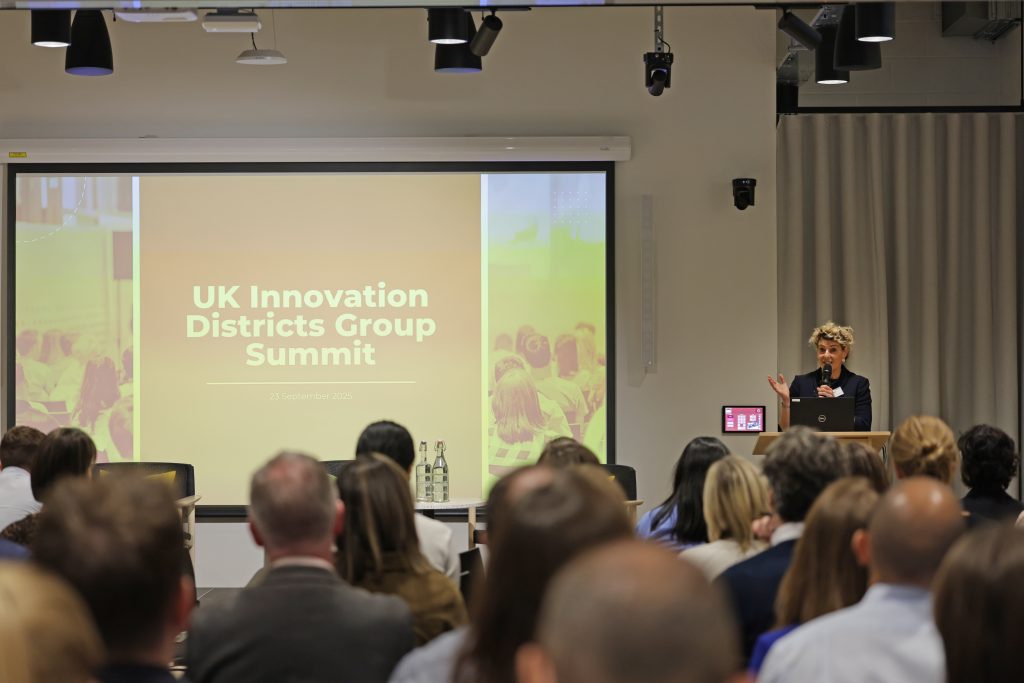
The day brought together leaders from across the UK to explore how innovation districts can unlock inclusive growth and deliver on the UK’s Industrial Strategy. Discussions spanned:
Collaboration and partnerships: What’s the secret behind Innovation Districts and why they are so popular? With Gemma Carpenter (Vice-Chair, UK Innovation Districts Group), Jodie Eastwood (Knowledge Quarter London), Stephen Jones (Core Cities UK), Matt Mason (The Crown Estate).
From Insight to Action: The Role of Innovation Districts in delivering the Industry Strategy – Kavita Tailor (ARUP) introduced the UK IDG’s latest action paper – Unlocking UK Innovation Districts to accelerate Industrial Strategy outcomes.
Investing in innovation: unlocking growth via Innovation Districts – with Emma Frost (Chair, UK Innovation Districts Group), Emily Robson, (KQ Liverpool), Natalie Gasson-McKinley MBE (British Business Bank), Alan Welby (Connected Places Catapult).
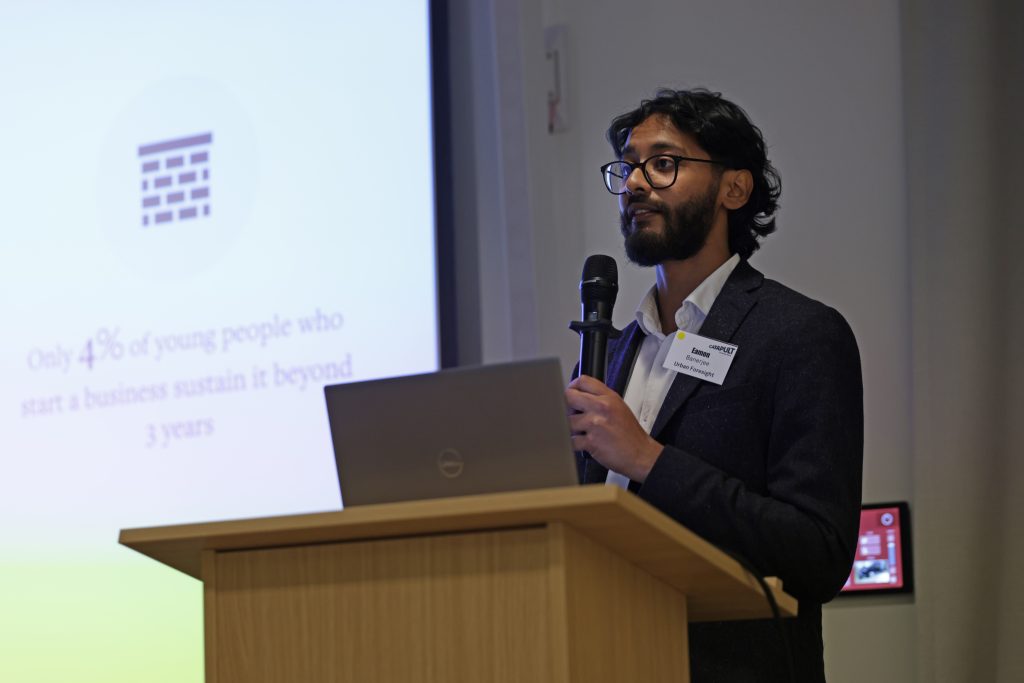
Empowering the Next Generation: Youth Entrepreneurship as a Driver of Innovation – Eamon Banerjee (Urban Foresight) introduced the UK IDG Entrepreneurial Skills report.
Skills, Startups, and Districts: Shaping the Future of Youth Entrepreneurship – with Vasant Chari (Connected Places Catapult), Alisdair Gunn (Glasgow City Innovation District), Charlie Charlton (Newcastle Helix), Phil Smith CBE (Skills England), Professor Hanifa Shah OBE (Birmingham City University)
Catch up on the key reports shared during the event: